A compassionate approach
Mental health sensitive hoarding support
Hoarding is recognised as a mental health condition, not a lifestyle choice. We approach every home with empathy, patience and respect, and we work alongside families and professionals.
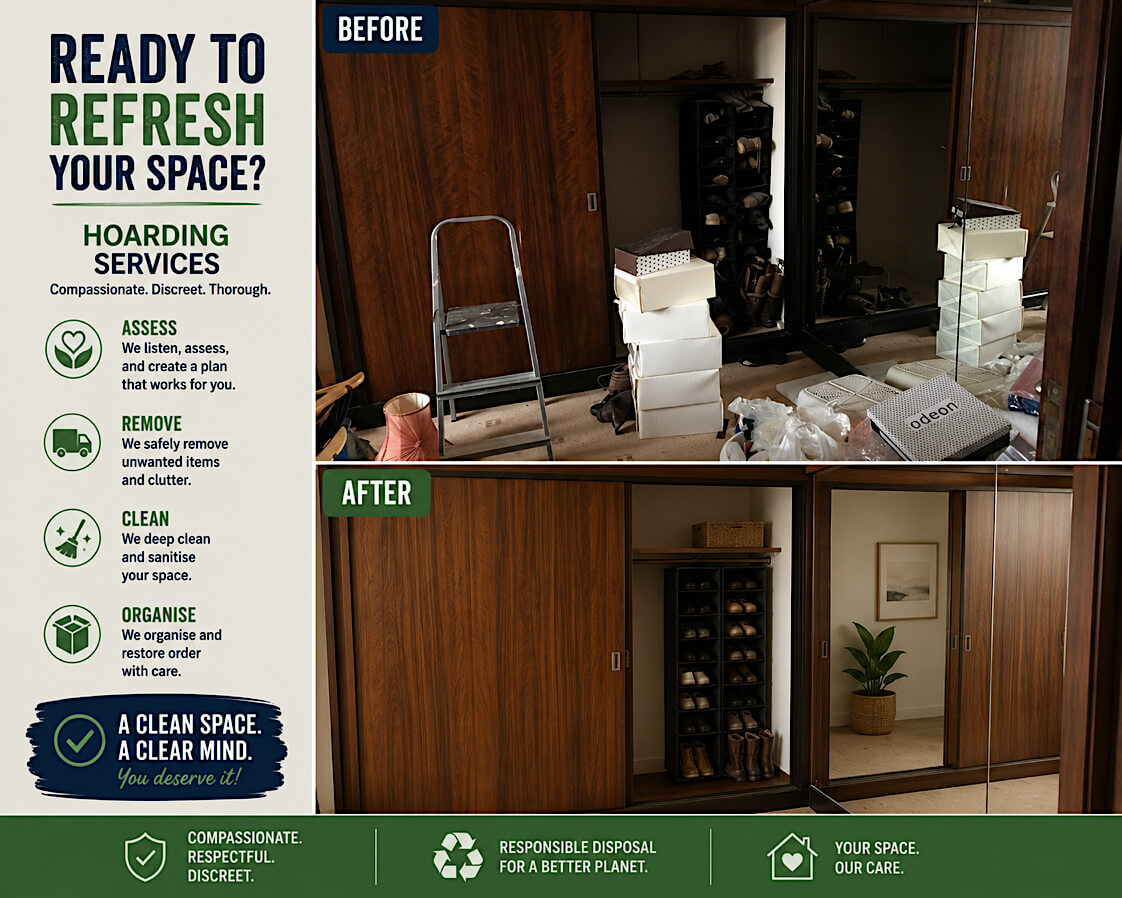
Understanding hoarding disorder
Hoarding disorder makes it genuinely difficult to part with possessions, often linked to anxiety, trauma or loss. Shame and pressure tend to make things harder, not easier — so our approach is built on trust rather than ultimatums.
Our compassionate approach
- We listen before we lift a thing.
- We agree decisions together, never forcing items out.
- We move at a pace the person can cope with.
- We protect privacy and dignity throughout.
Working with families & support workers
We are happy to coordinate with relatives, social workers, occupational therapists and housing teams, so the practical clearance fits into the wider support someone is receiving.
If you are worried about a loved one
Approaching someone about hoarding is delicate. Lead with care, avoid blame, and offer help rather than criticism. When you're ready, we can talk through options confidentially — there is no obligation. If someone is in crisis, please contact your GP or NHS 111.
FAQs
Common questions
Is hoarding a mental health condition?
Yes. Hoarding disorder is a recognised mental health condition, which is why a sensitive, person-centred approach matters so much.
Will you force someone to throw things away?
No. We never remove items without agreement. Decisions are made together, at the person's pace.
Can you work with our support worker?
Yes — we regularly coordinate with families, social workers and other professionals.
Ready when you are
Free, confidential advice and a clear fixed price. We work at your pace.
0800 494 7220Request a callback